

Housing and Homeless Services
Housing and Homeless Services Unit
CALL 211 and press #3 and #1 if you are homeless or in a housing emergency.
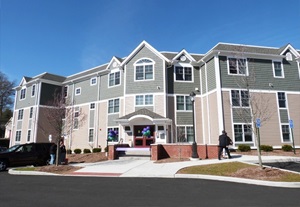
Geller Commons
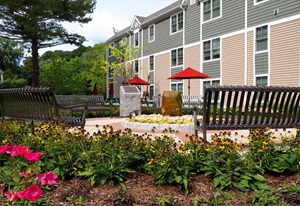
New Reach
PROGRAM INFORMATION
Housing and Homeless Services can be accessed through Coordinated Access Networks (CAN), which consist of community providers across the state who work with DMHAS eligible heads of households and individuals experiencing homelessness.
Persons are prioritized for housing services based on an assessment to be completed after calling 211. Calling 211 and/or completing the assessment does not guarantee housing.
Dial 211 from anywhere in Connecticut.
If you are hearing impaired use the TTY number: 1-800-671-0737.
If you are outside of Connecticut or have difficulties using the 211 number, dial 1-800-203-1234.
To begin this process, persons experiencing homelessness or at imminent risk of homelessness must call 211 and dial #3 and #1 to speak to a contact specialist trained to assess housing needs.
If a 211 contact specialist is unable to identify resources, the person will be offered a CAN assessment appointment in the community of his/her choice.
If assessed and prioritized with a high need for housing, the CAN community providers will include the household on the prioritized waiting list for housing.
Housing resources available through the CAN are prioritized for individuals and families who meet the literal homeless definition of the federal government’s Department of Housing and Urban Development (HUD).
Coordinated Access Networks (CAN) Map
Thank you for your interest in the HERO program.
Due to exceptionally high demand as of 12/8/25 the Housing Empowering Recovery from Opioids (HERO) program is at capacity. While we cannot accept new pre-screeners at this time, we will continue to provide updates if/when we are able to reopen to new applicants.
If you have already submitted a HERO pre-screener, a staff member from a HERO agency will be in contact with you based on the information you provided. Due to the significant number of pre-screeners submitted, this may take a few weeks as we continue to thoroughly review and process each pre-screener.
While waiting for a response from the HERO provider, you can begin gathering documentation that you will need to complete your program enrollment. The documents include:
- Income Verification for household members (paystubs, benefits verification, etc.)
- Birth Certificates OR Church Issued Baptismal Certificate OR Current Valid Driver's License for all household members.
A potential housing resource may include any of the following DMHAS programs:
- CT Collaborative on Re-Entry
- Social Innovation Fund
- HUD 811 Program
- HUD Continuum of Care Rental Assistance
- Permanent Supportive Housing Services
Projects for Assistance in Transition from Homelessness (PATH)
Federally funded through the Substance Abuse and Mental Health Services Administration (SAMHSA), PATH programs provide outreach and engagement into services to persons who are homeless or at risk of homelessness and have serious mental health needs or who have mental health needs with a co-occurring substance use disorder.
PATH State Summary (2026)
The Department of Mental Health and Addiction Services (DMHAS) is requesting public comment regarding the annual Projects for Assistance in Transition from Homelessness (PATH) application.
The State Summary Narrative from the PATH application will be posted on the DMHAS website on Tuesday, March 24th to Friday, March 31st. All interested parties may use this opportunity to comment on the State Summary Narrative by emailing:
Mollie Machado
Behavioral Health Program Manager
Housing and Homeless Services
DMHAS
Mollie.machado@ct.gov
SSI/SSDI Outreach, Access, and Recovery (SOAR)
Visit our website with information on SOAR.
Transit HOP Program
In an effort to address a marked increase in persons who may be experiencing homelessness, mental health, and/or substance use concerns at CT Rail and FasTrak stations, the Connecticut Department of Transportation (DOT) has partnered with DMHAS and the Department of Emergency Services and Public Protection (DESPP) to provide a new outreach program. The goal of this new program is to engage, support and connect people who may be unstably housed, or who may have challenges with mental health or substance use, to community resources.
Connecticut Harm Reduction Alliance (CTHRA) outreach workers will be available to transit stations in the evening hours, between 10PM and 1AM. These outreach workers will assist individuals with getting into shelter or onto the shelter waitlist; making housing plans; seeking treatment for mental health or substance use issues, and linking people to other services as needed. State Troopers will also be available during evening outreach to support the safety of the CT Rail, CT FasTrak employees, outreach teams, and riders.
CT Harm Reduction Alliance Outreach workers will have lanyards and badges that clearly identify them as well as allow them to ride the rails and FasTrak, so that engagement can happen on the trains, buses, or at the stations. This new program will begin with a focus on the Hartford and New Britain stations and will expand to other locations over time. If you have any questions, please contact Mollie.Machado@ct.gov.
Publications
- Opening Doors: Federal Strategic Plan to Prevent and End Homelessness
- Opening Doors Connecticut: A Framework for Ending Homelessness
Links to organizations dedicated to ending homelessness and increasing housing opportunities
State and Federal Government:
- Connecticut Department of Housing
- Connecticut Department of Social Services
- Connecticut General Assembly Housing Committee
- Department of Housing and Urban Development
- Substance Abuse and Mental Health Services Administration
- United States Interagency Council on Homelessness
Connecticut-Based Agencies:
- Advancing CT Together
- Connecticut Balance of State Continuum of Care
- Opening Doors Fairfield County Continuum of Care
- Connecticut Housing Finance Authority (CHFA)
- Connecticut Coalition to End Homelessness
- Connecticut Housing Coalition
- Partnership for Strong Communities
- United Way of Connecticut
National Agencies:
- CSH – The Source for Housing Solutions
- Melville Charitable Trust
- National Alliance to End Homelessness
Additional Links:
- CT Housing Engagement and Support Services (CHESS)
- Supportive Housing Training Catalog Fall 2023
- System-Wide Analytics and Projection (SWAP)
- Housing and Homeless Service Provider Information
Contact Information
- Alice Minervino, Director, alice.minervino@ct.gov, (860) 418-6942
- Brenda Earle, State Program Manager, brenda.earle@ct.gov, (860) 418-6845
- Lisa Callahan, Health Program Associate, lisa.callahan@ct.gov, (860) 418-6629
- Mollie Machado, Program Manager, mollie.machado@ct.gov, (860) 941-9451
- Kimberly Beach, Program Manager, kimberly.beach@ct.gov, (860) 418-6832
- Jessica Remmey, Program Manager, jessica.remmey@ct.gov, (860) 418-6675
- Giovanni Adavelli, Health Program Assistant II, giovanni.adavelli@ct.gov, (860) 418-6660